Ixion in Astrology – Meaning, Myth, and Astrological Interpretation

Ixion in astrology highlights deep psychological and ethical themes in natal chart interpretation. This complex Plutino, named after the mythological king Ixion who fathered the Centaurs with Nephele, represents transformation, process, and tension between ambition and morality. In a natal chart, Ixion shows where personal growth may collide with ethical challenges, creating opportunities for profound insight—or repeating cycles of difficulty. Understanding Ixion’s placement can illuminate hidden patterns, psychological dynamics, and the interplay between transformative processes and moral boundaries.


Ixion is one of the larger newcomers in astrology.

Ixion is one of the larger newcomers in astrology.


Ixion in astronomy

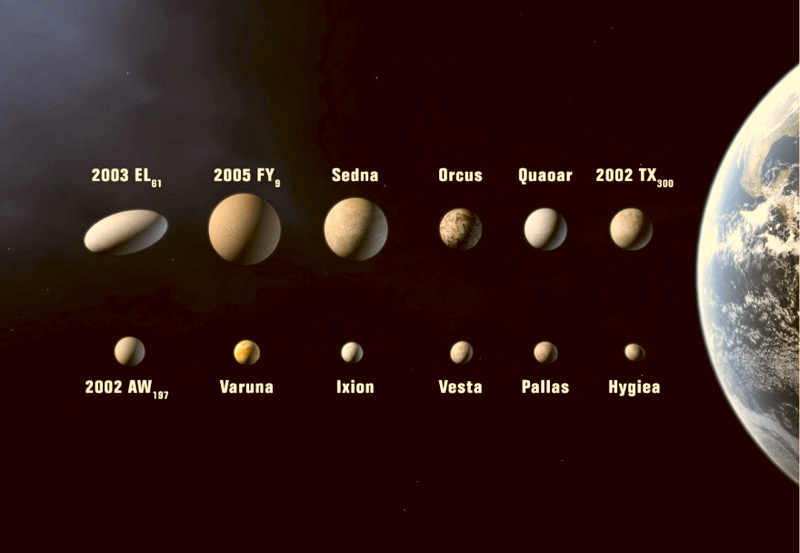
Ixion (MPC number 28978) is a large trans-Neptunian object classified as a Plutino, meaning it occupies a stable 2:3 mean-motion resonance with Neptune. Its physical dimensions have been subject to multiple revisions based on evolving observational data, and its diameter is currently estimated at approximately 617 kilometers, placing it among the larger known objects in the Plutino population.

Ixion was discovered on May 22, 2001, at the Cerro Tololo Inter-American Observatory (CTIO) during systematic surveys of the outer Solar System. It was named after Ixion, the mythological king of the Lapiths, who in Greek myth fathered the Centaurs with Nephele, a cloud formed in the likeness of Hera.

From an astrophysical perspective, Ixion is believed to be a low-albedo object, likely composed of a mixture of water ice, organic-rich compounds (tholins), and silicate material, consistent with other large Kuiper Belt objects. Spectroscopic observations suggest a moderately reddish surface, indicative of long-term space weathering due to cosmic radiation and solar wind exposure.

Within the broader Plutino population, Ixion occupies an intermediate position between smaller resonant bodies and dwarf-planet candidates, both in size and physical complexity. Its ambiguous status reflects the still-evolving classification criteria applied to trans-Neptunian objects and underscores the limitations of current observational resolution.


What Is Ixion in Astrology?

Discovered in 2001, Ixion is classified as a Plutino, a class of trans-Neptunian objects locked in a 2:3 orbital resonance with Neptune. In astrology, such bodies are typically associated with deep, collective, and often unconscious processes rather than everyday personal traits.

Ixion’s symbolism emerges at the intersection of myth, psychology, and ethics, making it particularly relevant in charts dealing with crisis, accountability, taboo, and transformation. Among the Plutinos, Ixion carries one of the most complex symbolic profiles. Its astrological interpretation resonates strongly with Fragment 95 of Heraclitus, which states: “You will not discover the boundaries of the soul, even if you travel every path; so deep is its logos.”


Cubewanos Haumeids & other TNOs - Benjamin Adamah s Plutinos-Benjamin Adamah s Centaurs Damocloids Scattered Disc Objebcts - Benjamin Adamah s


Hilda-asteroids astrological meaning

Also available via amazon.com, Barnes & Noble and your local bookstore


The Mythological Origins of Ixion

In Greek mythology, Ixion was a king who committed grave transgressions against both human and divine law. After murdering his father-in-law, Ixion was purified by Zeus, only to betray this mercy by attempting to seduce Hera. As punishment, he was bound to a fiery, ever-turning wheel, condemned to eternal motion.

Astrologically, this myth provides a symbolic framework for interpreting Ixion as:

  • violation of sacred trust
  • abuse of power or privilege
  • cycles of punishment and repetition
  • confrontation with moral responsibility

The endlessly turning wheel reflects psychological patterns that repeat until consciously confronted.

Astronomical Background: Ixion as a Plutino

Ixion’s classification as a Plutino places it among a group of objects associated with Neptunian themes: dissolution of boundaries, altered states, collective myth, and moral ambiguity. Unlike inner planets, Ixion operates slowly, emphasizing generational or long-term processes.

In charts, Ixion’s placement gains importance when:

  • conjunct personal planets
  • aligned with angles (ASC, MC)
  • involved in hard aspects


the meaning of Ixion in astrology - the astrological meaning of Ixion - Ixion in horoscope

Ixion precipite dans les enfers – by Jules-Elie Delaunay


Core Themes of Ixion in Astrological Interpretation

All Plutinos operate within a broadly Scorpionic / Plutonic mode, emphasizing deep transformation, crisis, and regeneration. Ixion, however, accentuates the purely process-driven aspect of this axis, resonating strongly with Scorpionic features as the catabolic, transformative, and destructive where necessary to allow new growth.

Complex, Bizarre, Creative — and Prone to Fatal Errors

Ixion is work-oriented and vibrantly active, displaying an Aries-like impulsiveness combined with a Scorpio-like affinity for research, experimentation, and engineering.

Ixion is technical, inventive, and creative, yet prone to major—or even fatal—mistakes. It tends to accumulate difficult karma and often expresses itself in surreal or bizarre ways. Themes of a Jekyll-and-Hyde dichotomy may appear, though not necessarily in a moralistic sense. Ixion explores conscience rather than conscience being given. It “creates centaurs,” symbolically speaking, through improbable or hybrid unions—such as Salvador Dalí’s conjunction with the Neptune Trojan Otrera. Ixion is associated with capricious, strange, and sometimes disturbing dreams. It breaks established patterns, often fails to reach a final goal because too many goals appear equally compelling, or because Ixion neglects to acknowledge the benefactor who made the process possible in the first place.

The Core Process

The essential characteristics of Ixion include: the process itself; primordial confrontation; the earliest awareness of good and evil; and the emergence of ethical dilemmas. These dilemmas frequently arise in connection with technology, social structures, artistic projects, politics, or literature. Ixion is also linked to the accumulation of negative karma and to inventions or creations that possess a destructive or ambivalent reverse side.

At its core, Ixion represents the process-oriented self—a self that must remain unattached to outcomes, fixed goals, or enduring bonds in order to continue functioning as process. This is yet another expression of the Scorpio–Pluto principle: death as change, and change as the continuation of process. Ixion therefore carries strong associations with transition, transformation, recycling, creation, and destruction.

Somewhat dissonant—but not paradoxical—is Ixion’s drive toward material gain. Scorpio energy, by its very nature, evokes its complementary Taurus polarity: accumulation, value, and substance.

Ixion and Creations That Turn Against Their Creator

A defining Ixion theme is the invention or creation that ultimately turns against its creator. Ixion’s initiating force, pioneering drive, and masculine sexual energy often reveal wounds or ethical blind spots. These blind spots can result in well-intentioned but socially disastrous outcomes, or in cold, inhumane expressions of malice devoid of empathy.

A dominant Ixion in the natal chart often seeks emotional safety and security, yet can only achieve this by consciously cultivating ethical awareness. This includes the recognition of limits and the voluntary restriction of freedoms where those freedoms infringe upon the boundaries of others—human, animal, vegetal, or environmental.

In creative expression, Ixion manifests as originality bordering on the capricious, frequently complex and unsettling. A striking example is H. R. Giger, who had Ixion conjunct Varda (indicating immense emphasis and impact), in opposition to Jupiter, and squared by the cusps of the 6th and 12th houses.

Ethical Confrontation and Accountability

Ixion is often especially prominent or even dominant when ethical blind spots surface and demand reckoning. This prominence does not necessarily imply personal wrongdoing; rather, it marks moments where unconscious processes, moral ambiguity, or unchecked momentum rise to the foreground and require conscious engagement.

Repetition and the Turning Wheel

Like the mythic wheel, Ixion symbolizes recurring patterns—especially those rooted in denial or avoidance. Awareness is required to break these cycles.

Transformation Through Crisis

Ixion strongly amplifies the processual and often amoral side of transformation. In empirical chart analysis, its influence frequently manifests as transformation without ethical anchoring—change driven by momentum rather than reflection. This makes Ixion particularly relevant in contexts involving uncontrolled innovation, ideological experimentation, and systems that evolve faster than their moral frameworks.

Ixion’s influence is rarely comfortable. It often coincides with situations that force deep psychological or moral transformation, leading either to maturation or self-destruction, depending on conscious engagement.

Ixion tortured in Tartarus - etching dated 1731 | Ixion in astrology

Ixion tortured in Tartarus – etching dated 1731

Ixion in Natal Charts

In personal astrology, Ixion highlights areas where the native may:

  • test limits or social boundaries
  • encounter taboo subjects
  • confront shadow material
  • face moral or ethical dilemmas

Its house position indicates where these themes unfold, while aspects describe how they are experienced.

Ixion in Forensic and Event Astrology

Extensive empirical research suggests a notable correlation between prominent Ixion placements and phenomena such as institutional disinformation, ethical erosion within governance, and what might be described as Frankensteinian science—technological or scientific experimentation advancing without sufficient moral containment.

These observations are based on large-scale pattern analysis rather than isolated examples, reinforcing Ixion’s role as an indicator of transformation driven by unchecked process rather than conscious ethical intent.

Ixion has proven especially relevant in forensic astrology, where charts relate to legal cases, scandals, or ethical breaches. Its symbolism often emerges in moments involving:

  • abuse of authority
  • exposure of hidden misconduct
  • cycles of wrongdoing and consequence

In mundane charts, Ixion can point to collective moral crises or institutional failures.

Ixion Within Asteroid and Trans-Neptunian Astrology

While sometimes overlooked, Ixion demonstrates the value of incorporating minor planets and trans-Neptunian objects into astrological practice. These bodies frequently fill symbolic gaps left by classical planets, offering greater nuance and precision.

Ixion, in particular, serves as a symbolic indicator of ethical stress points within both individual and collective narratives.

Conclusion: Why Ixion Matters in Astrology

Ixion in astrology represents the moment where denial ends and accountability begins. Its symbolism challenges individuals and societies alike to confront the consequences of their actions and to transform through awareness rather than repetition.

For astrologers working with psychological depth, ethics, or collective processes, Ixion is an indispensable interpretive tool.


This article is part of VAMZZZ’s ongoing research into asteroid astrology, mythology, and occult symbolism. The interpretive framework presented here is informed by long-term empirical research, including the systematic analysis of hundreds of thousands of chart records during the development of the Asteroïden-Gids project.


You may also like our other articles on newcomers in astrology


Typhon in astrology and the Fukushima disaster